Daydreaming Shark Surgeon
Year: 2025
Game Link: Daydreaming Shark Surgeon
Group Size: 4
Daydreaming Shark Surgeon is a 2D WarioWare-like Microgame made within 3-4 weeks. The game revolves around the concept of a surgeon performing surgery on a shark while daydreaming. The player completes goofy tasks composed of minigames to finish the surgery.
During this project, the biggest challenge I had was maintain the crazy style of the sound scape while keeping the mix clean and cohesive together. This way, the players can feel the most fun out of the minigames themselves.
To accomplish this goal, I mainly utilize FMOD’s instance limiting function and sidechaining function.
The instance limiting really helped with the goblin slicing minigame (shown in video above at 0:10), where I wanted the player to feel like there is a cluster of goblins attacking them, but also don’t want the entire mix to clip because of that. In the end, I picked a max event instance count of 2 to create this group-like effect.
There are mainly two types of sidechaining in the project. The first one is a low-frequency focused sidechain that ducks the music’s low frequencies to make room for the sound effects. The second one is a volume sidechain that ducks the music when the sound effect is purely too powerful, such as explosion sounds.
Work Flow
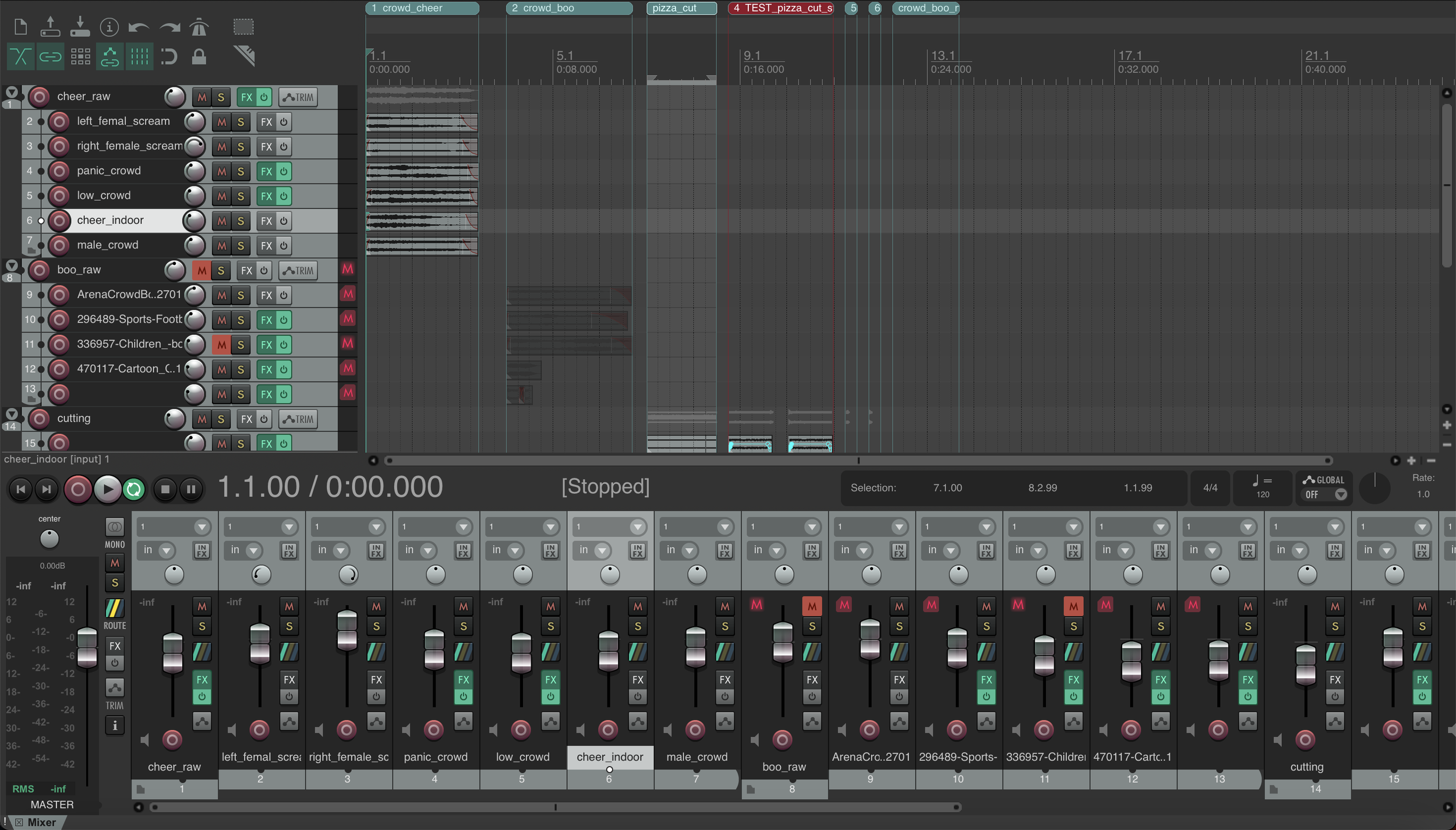
Created sound effects using sound libraries and raw recordings in Reaper.
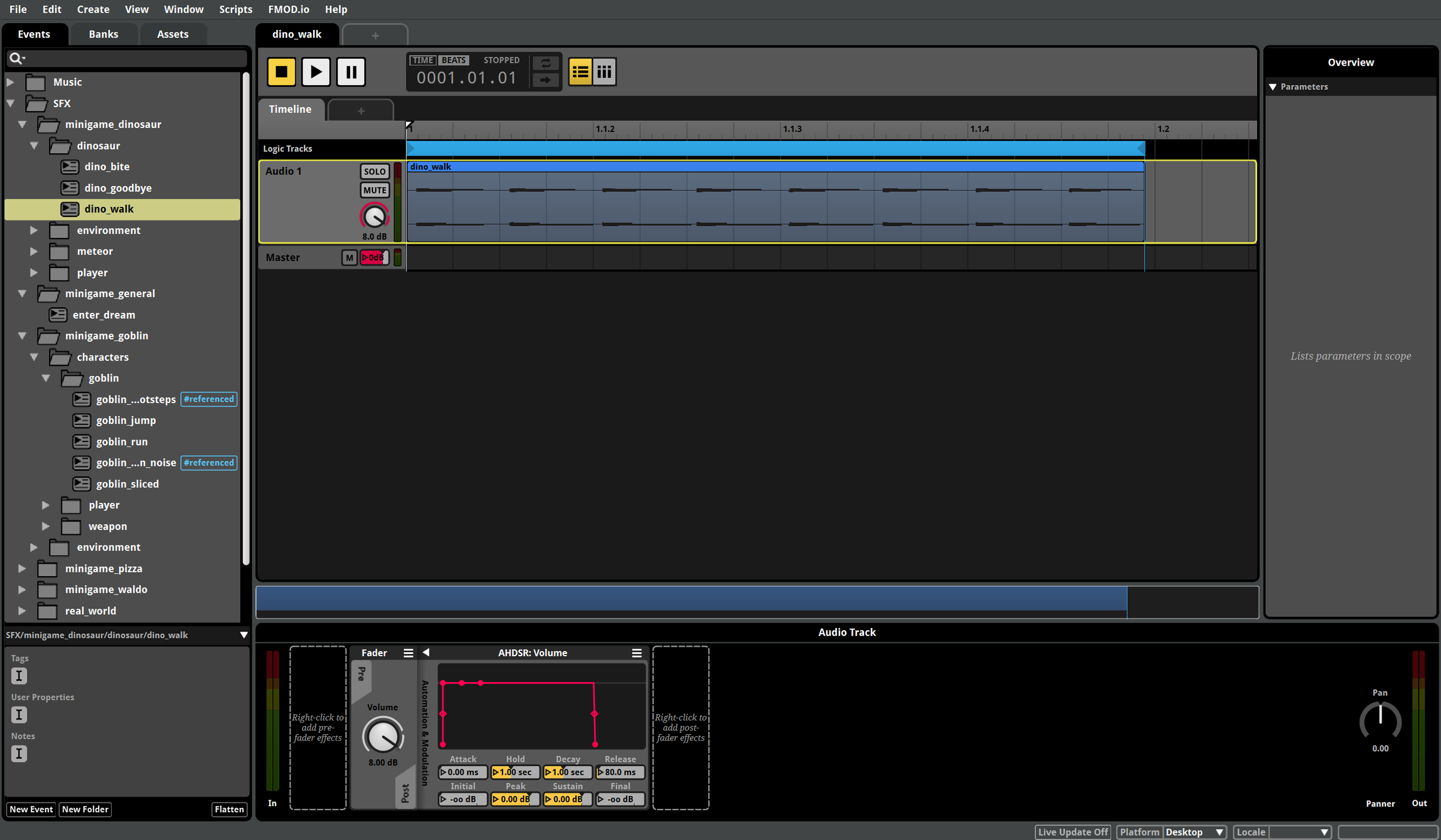
Sound effects and music tracks are implemented into the game through FMOD as events.
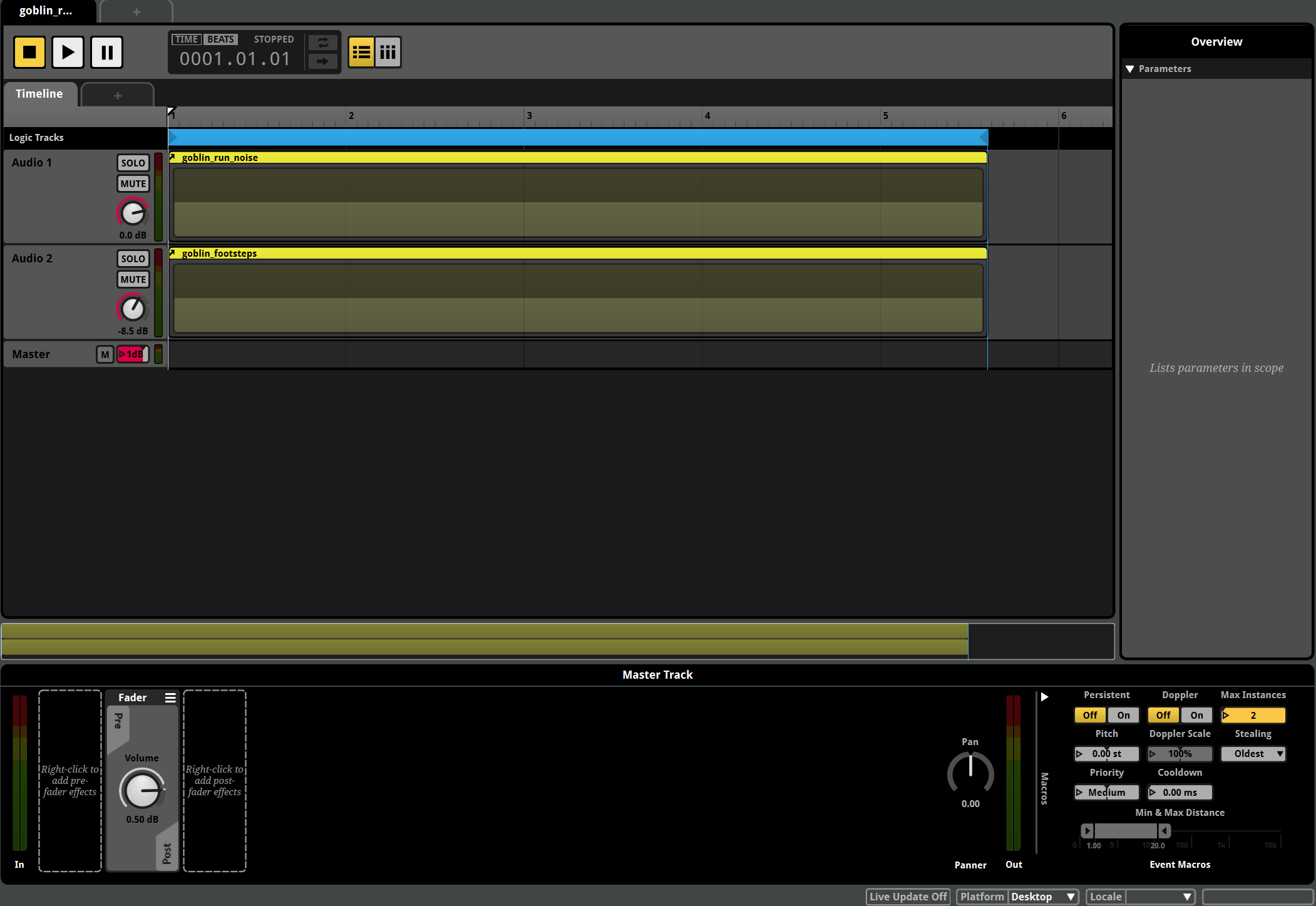
Some events (such as those that triggers in groups of game objects) are instance limited for mix clarity.
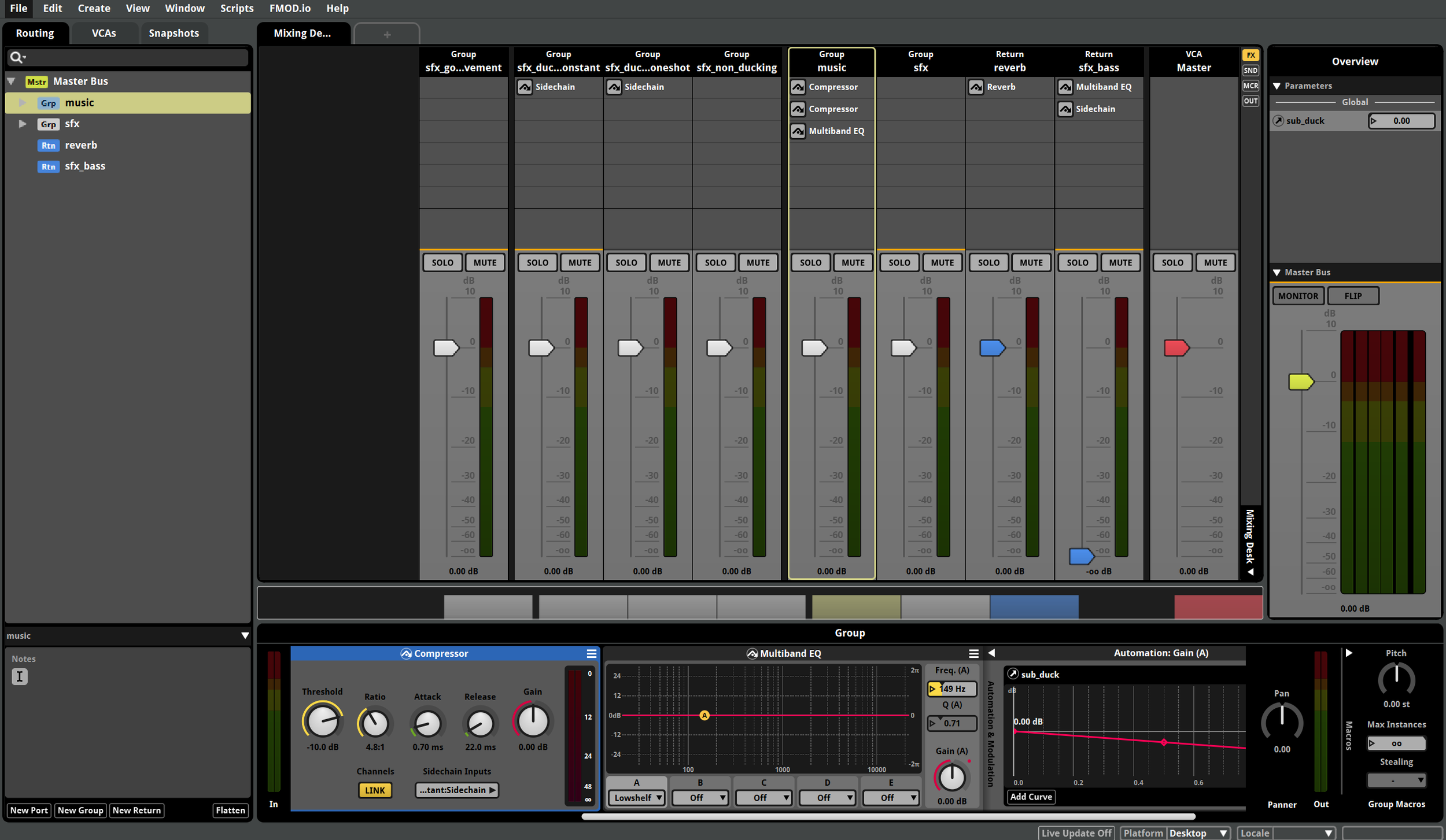
Music tracks are sidechained to the signal of sound effects, ducking the music’s low end volume or their volume overall, depending on the situation.
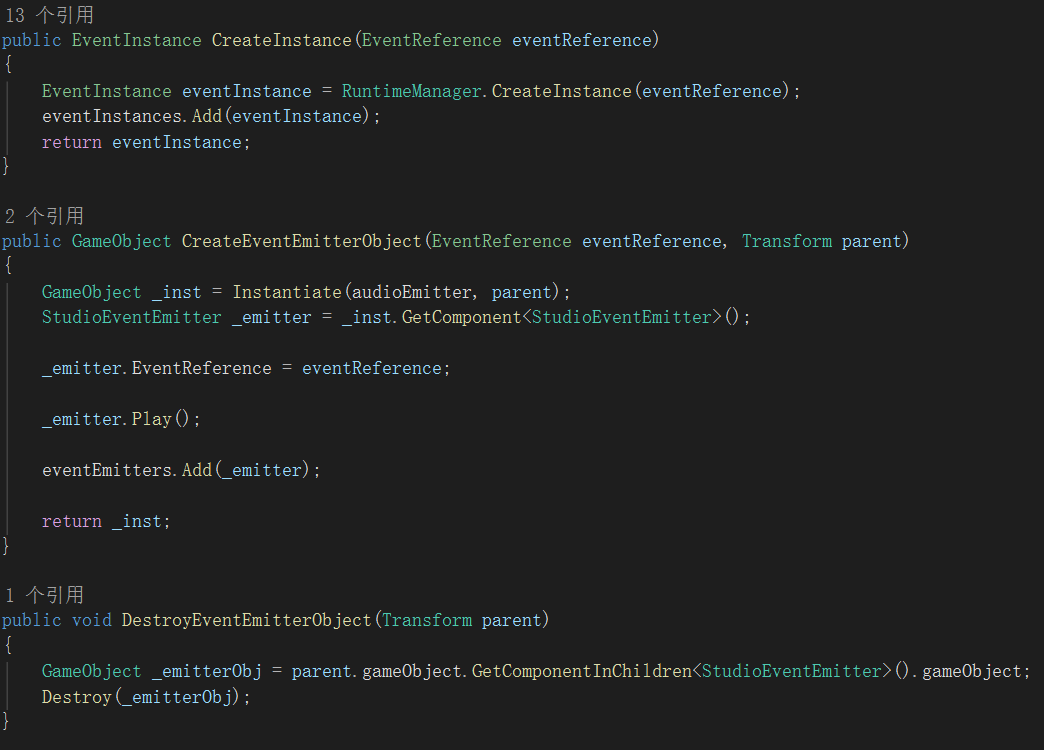
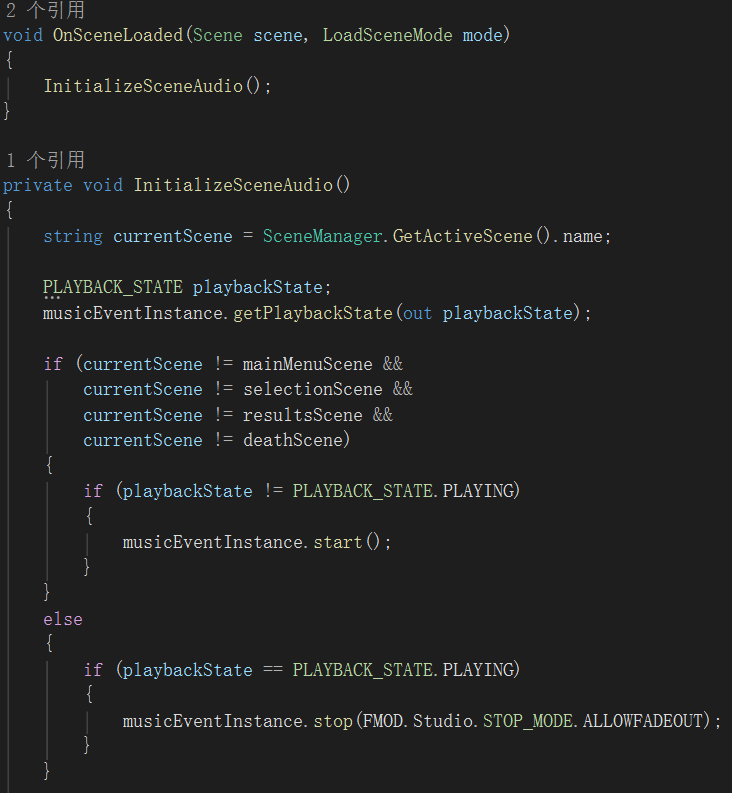
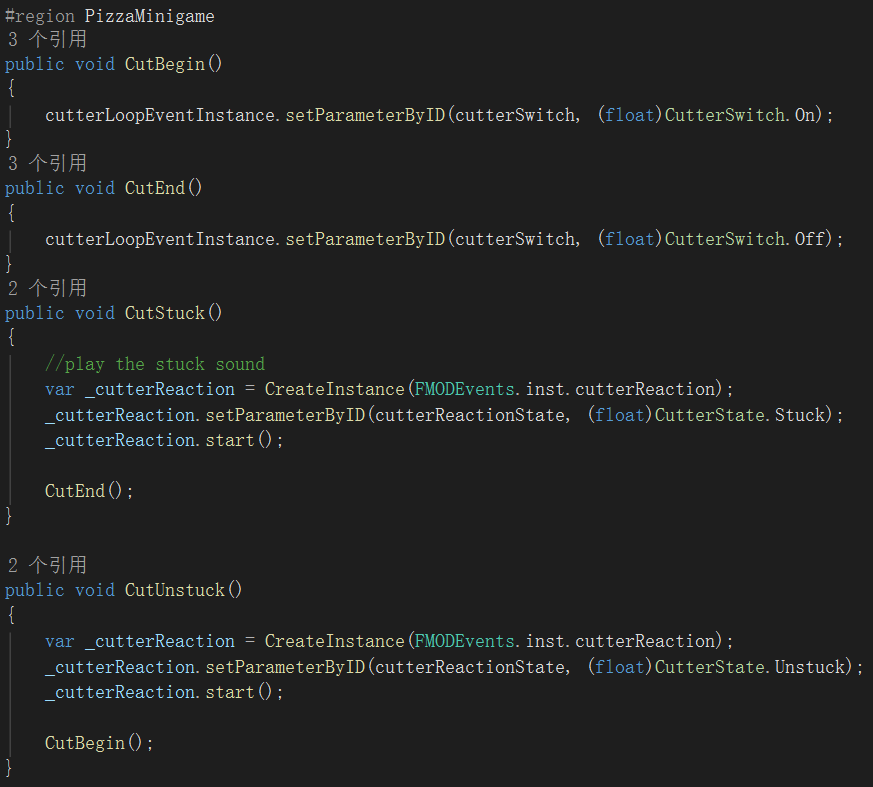
Created C# scripts to hook up FMOD events into Unity. Functions that are used in other scripts are labeled by literally what sounds they play, so programmers can utilize them easily.